
Invitation | Japanese Barberry – an invasive plant
YOU are invited to a hands-on training session on one of the barberry stands in Scowen Park.
Who – the Estrie Regional Environment Council (CREE)
When – October 3rd from 9:00 am to 12:00 pm
Where – Scowen Park
Before September 30th
LIMITED PLACES
We recognise the importance and urgency of taking action to tackle the spread of the Japanese barberry, both to protect biodiversity and to address public health concerns relating to Lyme disease.
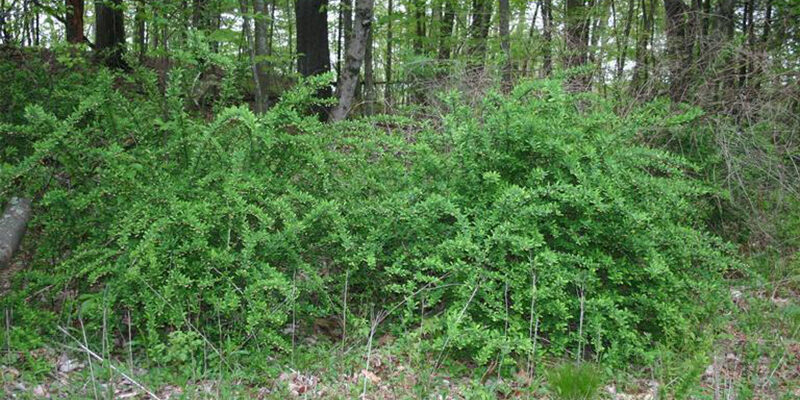
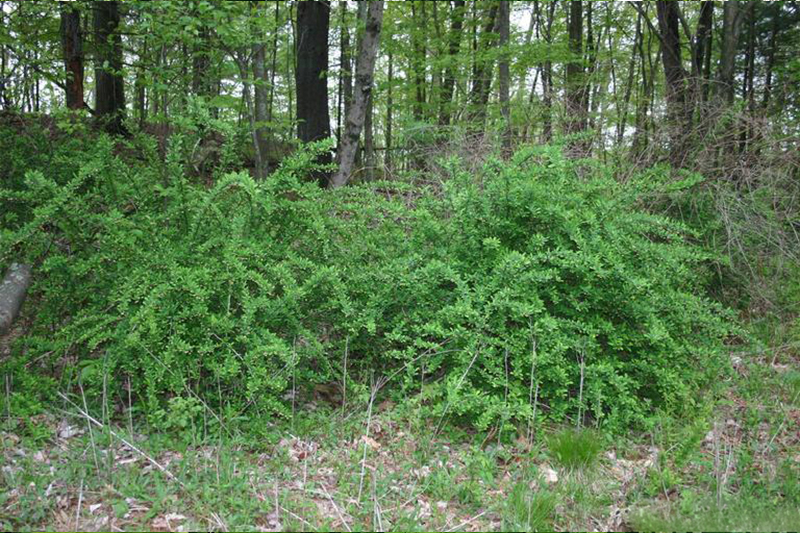
Japanese barberry is a small, thorny deciduous shrub. Several purple, pink or yellowish cultivars have been developed and are often planted in urban landscaping schemes. Native to Japan, it is considered an invasive alien species.
Native to Japan, the Japanese barberry was introduced to Boston (Massachusetts) in 1875. From the 1920s and 1930s onwards, it became popular in horticulture and was planted extensively in the north-eastern United States. It soon escaped from gardens and hedgerows to colonise natural habitats. Today, Japanese barberry is found from Ontario and Quebec in the north to Georgia and Tennessee in the south. It is well established in the north-eastern United States, around the Great Lakes and in the Appalachians. In Canada, the species occurs naturally in Ontario, Quebec, Nova Scotia and New Brunswick.
Probably introduced to Quebec in the 1940s, Japanese barberry remains relatively rare in the wild for the time being and is confined mainly to the southwest of the province. Most sightings come from the Montérégie, the Estrie and the Outaouais regions and are concentrated around the major urban centres of Montréal, Sherbrooke and Gatineau. However, an increasing number of sightings are being reported in other regions of Québec: Centre-du-Québec, the Laurentians, the Mauricie, Capitale-Nationale, Bas-Saint-Laurent and the Gaspé Peninsula.