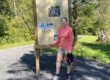
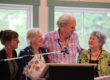
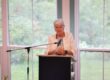
The Estrie Regional Environment Council (CREE), in collaboration with the Massawippi Foundation and the Massawippi Conservation Trust, organized and held a hands-on training session on methods for eradicating Japanese barberry, as well as a press conference to highlight the growing presence of this emerging invasive alien plant in the region.This was an opportunity to present a new regional project focused on awareness, prevention, and community engagement, funded by the Quebec government’s Sustainable Forest Management Program
A Silent Invasion with Multiple Impacts
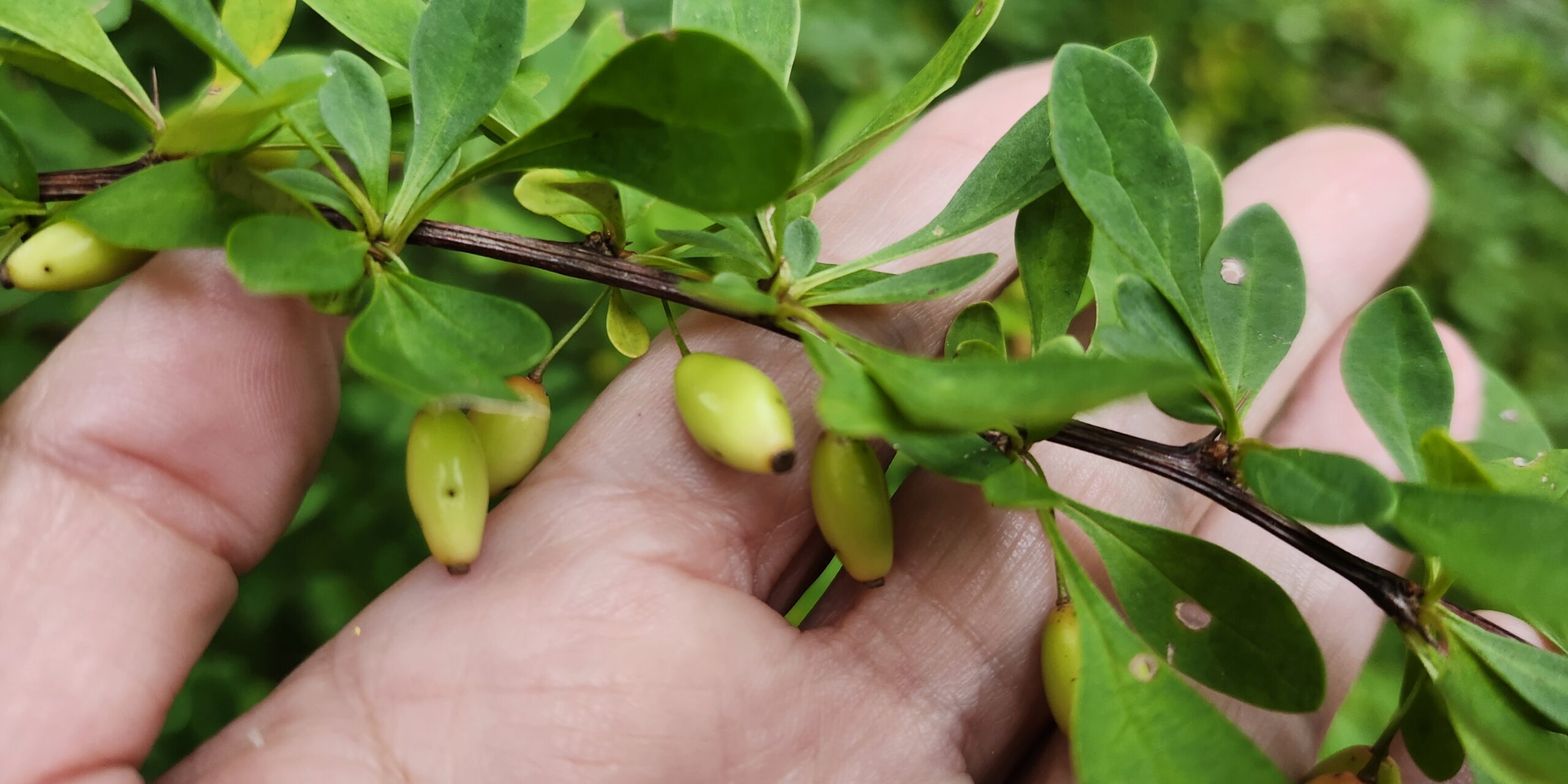
Introduced to Quebec for horticultural purposes, Japanese barberry is a shrub that can grow up to two meters tall, recognizable by its thorns, clustered leaves, umbrella-shaped flowers, and red berries. Its ability to tolerate shade allows it to establish itself even under a healthy forest canopy, unlike other invasive species such as knotweed or buckthorn. Reproducing via seeds, rhizomes, and stems, it is particularly difficult to control.
Ecologically, the species displaces native plants and transforms the understory. Since white-footed mice do not eat it, they are actually encouraged by its presence, as they graze on neighboring native species. But the issue goes beyond biodiversity alone: the thorny bushes provide a prime refuge for the white-footed mouse, which finds shelter from predators and is itself a host to the black-legged tick, a vector of Lyme disease.
“Although there are no confirmed cases at Scowen Park, the link between the presence of the E. virginii and the white-footed mouse is based on the scientific literature and what we observe elsewhere. The park serves as an example of what could happen anywhere in the Estrie region, and even throughout Quebec. The real issue is the use of this plant in our municipalities and gardens,” explains David O’Connor, a biologist and environmental project manager at CREE.
An Iconic Park Under Pressure
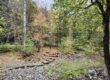
Scowen Park, which has been owned by the Massawippi Conservation Trust for a decade thanks to a donation from the Scowen family, welcomes hundreds of students and thousands of visitors each year, drawn by its proximity to the village of North Hatley. The first detections of barberry there date back to 2022, and the invasion has continued to grow ever since.
“Now that the threat has been identified, we will work on developing a management plan for this species within this protected area, so that we are ready to take action within a few months. In the meantime, we felt it was essential to begin raising awareness about this invasive species in collaboration with the CREE. We also invite all users of our trails to learn about the steps they can take to avoid contributing to its spread during their forest walks,” says Mélanie Lelièvre, Executive Director of the Massawippi Foundation and the Massawippi Conservation Trust. |
|
Four simple steps to take:
Do not buy or plant barberry
Brush off your boots before entering a natural area and again when leaving
Report the plant via the Quebec government’s Sentinelle app or iNaturalist.
Consult the Ministry of the Environment’s fact sheet to learn how to identify the species (available in French). For the English version, please refer to the Ontario Invasive Plant Council’s information sheet.