
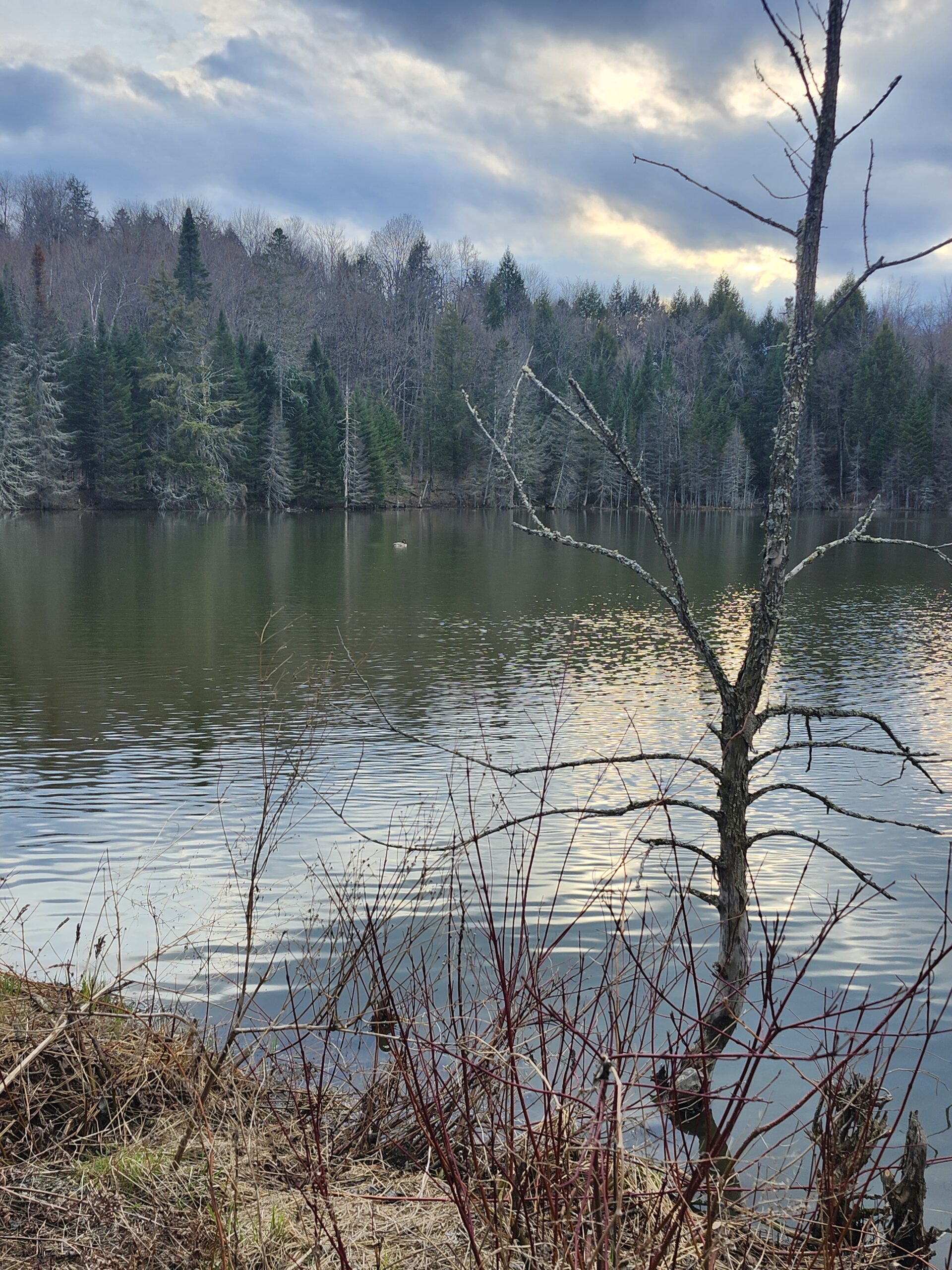
What began as a simple observation—a light appearing on the mountainside where there had only been darkness—sparked a movement. A small group of residents, with no formal background in conservation, recognized that the forests surrounding Lake Massawippi were more than beautiful landscapes. They were vital habitats, places of quiet, and part of a fragile ecosystem increasingly at risk from development.
Driven by this shared concern, the founders set out to learn. With guidance from experienced organizations, they built the knowledge needed to act. From these early efforts, two sister organizations were created: the Massawippi Foundation, to raise funds, and the Massawippi Conservation Trust, to protect land in perpetuity.
From the outset, their vision extended beyond conservation. While most funds support land protection, a portion is reinvested locally—supporting initiatives such as the Ayer’s Cliff Farmers’ Market, the Île du Marais, and local health services. This reflects a belief that a healthy environment and a strong community go hand in hand.
Public access also became a guiding principle. The founders chose to share the land by creating ecologically responsible trails and access points like Ethan’s Beach, promoting well-being and connection to nature—especially evident during the COVID-19 pandemic.
Fifteen years later, the organizations remain volunteer-driven, guided by dedicated board members and trustees, and grounded in four pillars: conservation, research, recreation, and education. Today, a skilled seasonal team builds and maintains the trail network with exceptional care. Though these trails feel public, they exist thanks to the Trust, donor support, and a shared commitment to stewardship.
To date, over 1,800 acres have been protected and oversee 39 kilometers of trails. While our public trails are what we are most widely known for and the most visible part of our work, conservation remains at the heart of everything we do.
Through our education program, we work with nine local elementary schools, nurturing curiosity and fostering a deeper connection to the natural world—helping inspire the next generation of conservationists.
This shared landscape belongs to all of us—its future depends on the care and commitment we choose to give it today.